


5 Anti-Drone Gun Systems
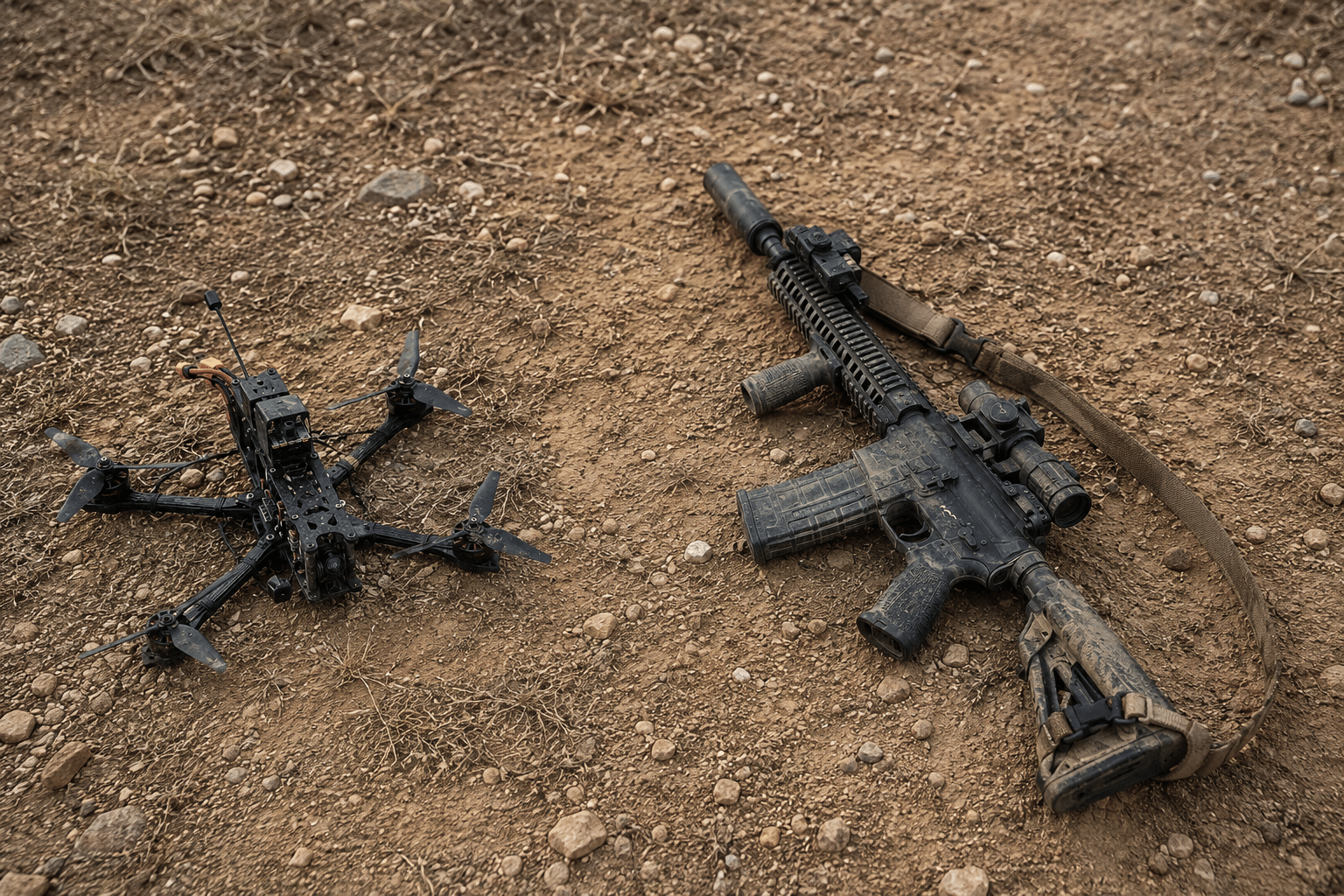
Drone threats have rapidly evolved from isolated security concerns into a persistent operational challenge for military units, law enforcement agencies, and critical infrastructure operators. Small unmanned aerial systems are now capable of surveillance, reconnaissance, electronic disruption, and direct attack, often at low cost and with minimal warning. As these threats become more sophisticated, organizations are increasingly seeking reliable methods of physically stopping hostile drones before they reach critical targets.
This has led to growing interest in modern anti-drone gun systems, a category of counter-drone platforms and weapons designed to disable or neutralize drones through electronic disruption, physical interception, or kinetic engagement. These systems range from portable handheld platforms to vehicle-mounted and fixed defensive solutions integrated into broader airspace security architectures.
However, not all anti-drone gun systems operate the same way, and not all are equally effective against evolving threats such as FPV drones, autonomous systems, and fiber optic-controlled platforms. Understanding the strengths and limitations of each approach is essential for building an effective drone defense strategy.
Why Anti-Drone Gun Systems Are Becoming More Important
Modern drone threats move quickly, operate at low altitude, and can approach from unexpected angles. Traditional perimeter security measures provide little protection against aerial threats, especially in environments where drones can navigate around barriers or exploit blind spots. In military, tactical, and special forces environments, drones are increasingly used for:
- Real-time reconnaissance
- Precision targeting
- Swarm attacks
- Electronic warfare support
- Direct kinetic strikes
This has accelerated the development of dedicated anti-drone platforms capable of engaging aerial threats at multiple ranges and under different operational conditions.
Unlike larger air defense systems, many anti-drone gun systems are designed for portability and rapid deployment, making them suitable for field operations, convoy security, perimeter defense, and infrastructure protection.
The Core Categories of Anti-Drone Gun Systems
Modern anti-drone gun systems generally fall into several operational categories. Some rely on electronic disruption, while others physically disable the drone itself. Increasingly, layered defense strategies combine multiple approaches to improve effectiveness against a wide range of threats. Here are 5 of the most common anti-drone weapon systems categories used today:
1. Portable RF Jamming Systems
Portable RF jamming systems are among the most recognizable anti-drone platforms. These systems typically resemble rifles or launchers and are designed to disrupt the communication link between a drone and its operator.
By targeting radio frequency and GPS signals, these systems can interfere with navigation, command-and-control functions, or automated flight behavior. Against traditional wireless drones, jamming systems may force the aircraft to land, hover, or return to its launch point.
Portable jamming systems provide several operational advantages. They are mobile, relatively fast to deploy, and can offer non-kinetic mitigation in environments where physical engagement is undesirable.
However, these systems also have significant limitations. They are ineffective against fiber-optic-controlled drones and against autonomous communication during operation. In electronically contested environments, RF congestion and adversary countermeasures may also reduce effectiveness. For these reasons, electronic anti-drone gun systems are increasingly viewed as only one layer within a broader defense architecture.
2. Vehicle-Mounted Anti-Drone Weapons Systems
Vehicle-mounted anti-drone systems provide greater power, range, and sensor integration than portable handheld platforms. These systems are commonly installed on tactical vehicles, armored platforms, or mobile command systems. Many vehicle-mounted systems integrate:
- Radar
- Electro-optical tracking
- Thermal imaging
- RF detection
- Electronic warfare tools
Some configurations also include kinetic engagement capabilities, allowing operations to transition directly from detection to neutralization.
Vehicle-mounted anti-drone systems are especially useful for convoy protection, mobile force defense, and forward-operating environments where persistent aerial surveillance is required. Their primary limitation is mobility within confined environments. While highly effective in open operational areas, they may be less practical in dense urban terrain or dismounted operations where smaller teams require lightweight counter-drone capability.
3. Fixed Anti-Drone Defense Platforms
Fixed anti-drone platforms are designed to protect permanent facilities such as military bases, airports, government infrastructure, energy sites, and critical industrial facilities. These systems often combine:
- Long-range radar
- Automated detection networks
- AI-assisted threat classification
- Integrated mitigation systems
Fixed anti-drone gun systems may employ electronic disruption, directed energy, or kinetic interception depending on mission requirements and rules of engagement.
The advantage of fixed systems lies in persistent coverage and integration into larger security networks. However, they are typically resource-intensive and may not address mobile or rapidly changing operational environments effectively. As drone threats continue evolving, many organizations are pairing fixed defenses with portable and kinetic systems to improve flexibility.
4. Shotgun-Based Anti-Drone System
Shotguns are often discussed as improvised anti-drone weapons systems because of their pellet spread and familiarity among operators. In limited situations, particularly against low-flying drones at close range, they may provide a basic kinetic response capability.
However, shotgun-based anti-drone systems have several operational disadvantages. Shotgun pellets lose velocity rapidly, limiting effective engagement distance and reducing energy retention against maneuvering aerial targets. Their spread pattern can also reduce reliability against small FPV drones moving at high speed.
Additionally, carrying a separate platform increases loadout complexity and limits anti-drone capability to operators assigned to that weapon system. While shotguns may serve as a temporary or improvised response in some scenarios, they are increasingly being replaced by more effective rifle-based counter-drone solutions.
5. Rifle-Based Kinetic Anti-Drone Gun Systems
Rifle-based kinetic systems have become one of the most practical and scalable approaches to modern drone defenses. Rather than introducing separate weapon platforms, these systems use specialized counter-drone ammunition within standard-issue rifles already carried by operators.
Drone Round Defense focuses specifically on this category, producing specialized counter-drone ammunition for 5.56 mm and 7.62×51 mm platforms. Unlike traditional shotgun approaches, rifle-based anti-drone systems provide:
- Higher projectile velocity
- Extended engagement range
- Improved accuracy against fast-moving FPV drones
- Greater retained energy
- Reduced loadout complexity
One of the most significant advantages is operational integration. Instead of assigning one or two personnel to carry dedicated anti-drone shotguns or separate launchers, every operator can maintain drone defense capability using their primary weapon system with designated anti-drone magazines.
This approach allows units to distribute counter-drone capability across the team without introducing additional weapon platforms, specialized launchers, or extensive retraining.
Drone Round’s specialized ammunition is engineered specifically for aerial targets and is compatible with existing 5.56 and 7.65×51 rifle systems already used throughout military and security operations. Because operators continue to use familiar weapon systems, no additional modifications or specialized training are required.
As drone threats increasingly include FPV, autonomous, and electronically resilient platforms, rifle-based kinetic systems provide a flexible and scalable response that remains effective regardless of how the drone is controlled.
Why Kinetic Solutions Are Increasingly Critical
Electronic warfare tools remain important, but modern drone threats increasingly bypass RF-based countermeasures entirely. Fiber optic drones, autonomous navigation systems, and preprogrammed FPV platforms are specifically designed to operate even in heavily jammed environments.
This has shifted greater emphasis toward kinetic defense solutions capable of physically disabling drones regardless of electronic resilience. The widespread use of FPV drones in Ukraine has demonstrated how rapidly inexpensive unmanned systems can reshape modern combat operations, while also highlighting the limitations of relying solely on electronic countermeasures. As a result, demand has accelerated for kinetic counter-drone capabilities that remain effective against autonomous and electronically resilient threats.
Unlike electronic countermeasures, kinetic anti-drone systems do not depend on disrupting communications or GPS signals. Instead, they directly neutralize the aerial threat itself. For military and tactical operators, this physical mitigation capability is becoming increasingly important as adversaries continue adapting drone tactics to defeat legacy counter-drone systems.
Building a Layered Drone Defense Strategy
No single anti-drone gun system can address every threat. The most effective strategies combine multiple layers of detection, tracking, electronic warfare, and kinetic engagement. A layered approach may include:
- Radar and EO-IR systems for detection
- RF countermeasures for wireless drones
- Kinetic systems for autonomous and fiber optic threats
- Portable and vehicle-mounted systems for operational flexibility
This integration ensures that organizations can adapt to changing threats without relying on a single point of failure. As drone threats evolve, anti-drone defense must evolve alongside them.
Strengthen Your Anti-Drone Capability With Drone Round Defense
Modern drone threats demand more than improvised solutions. Drone Round Defense specializes in purpose-built kinetic counter-drone ammunition engineered specifically to neutralize unmanned aerial threats using standard 5.56 mm and 7.62×51 mm rifle platforms.
By allowing operators to maintain anti-drone capability within their existing primary weapon systems, Drone Round reduces loadout complexity while expanding aerial defense coverage across the entire team. No additional weapon systems, specialized launchers, or platform modifications are required.
When electronic countermeasures fail, and a physical takedown is necessary, Drone Round provides a reliable kinetic layer designed for today’s evolving drone threat environment. Contact Drone Round today to strengthen your anti-drone capability and to acquire specialized ammunition built for modern operational demands.