


Top 6 Guns for Drone Defense
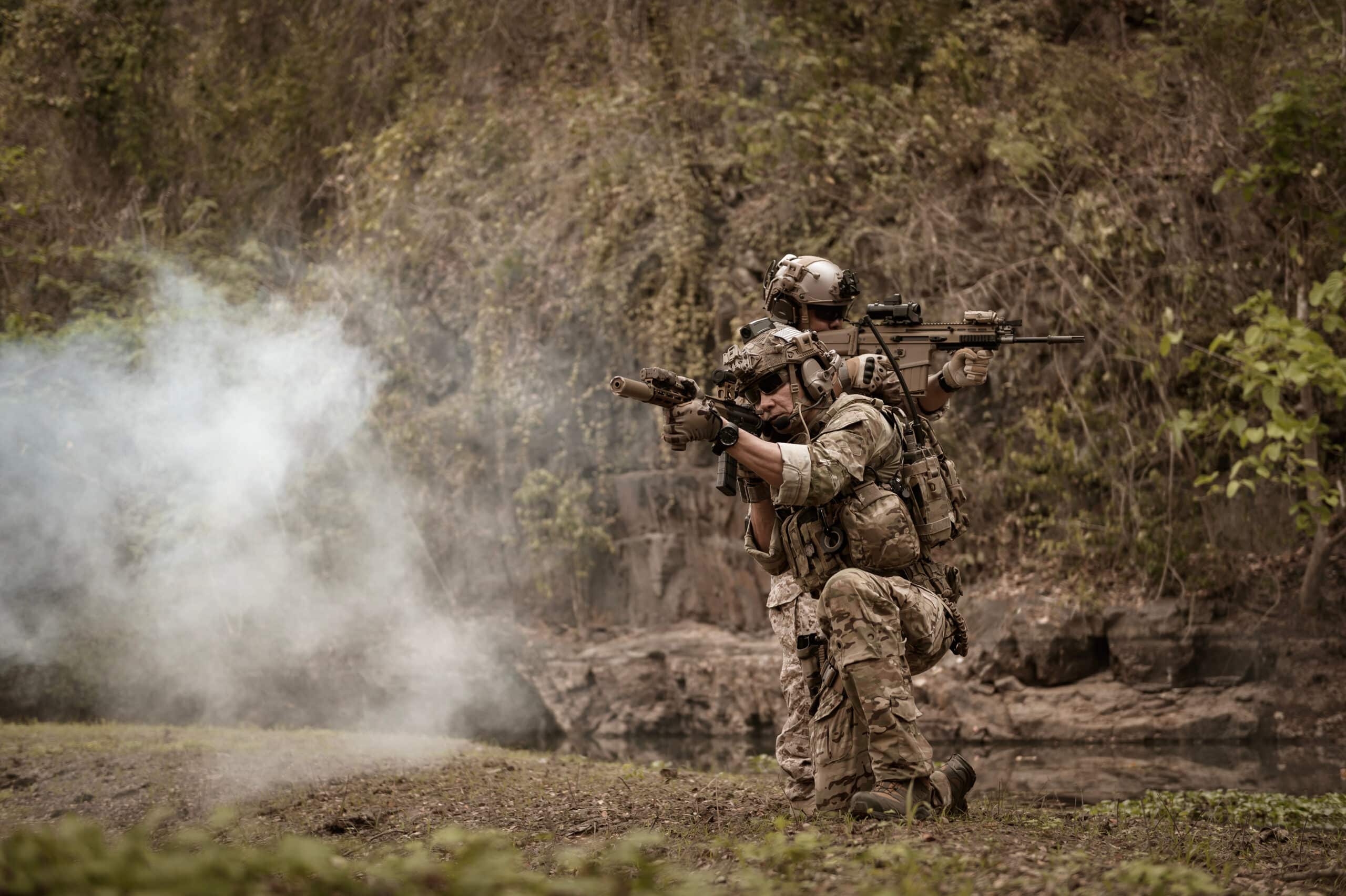
FPV drones have changed the way people think about airspace. What used to be a hobby or a niche military tool is now something that shows up in real, practical situations—from surveillance and smuggling to active threats in conflict zones. As drones have become cheaper, faster, and easier to deploy, the question of how to stop them has become less theoretical and more immediate.
While there are advanced systems designed specifically for counter-drone operations, many real-world encounters don’t happen in controlled environments with layered defenses already in place. In those moments, response options are limited to what’s already on hand. That’s where guns enter the conversation.
This article looks at 6 types of guns that are commonly used to engage drones at close to mid-range. Each option has strengths, limitations, and trade-offs that matter depending on distance, mobility, and the speed at which a drone can be deployed. Understanding those differences is key to choosing an effective drone defense gun, rather than relying on assumptions or internet myths.
Understanding the Role of Guns in Drone Defense
Firearms are not detection tools. They don’t automatically track targets, nor do they replace layered defenses. What they offer is immediacy. When a drone is visible and within range, a gun may be the only option left to physically stop it.
Modern conflicts have shown how quickly drones adapt to electronic countermeasures. In sustained combat environments, drones increasingly operate with hardened links, autonomous navigation, and tactics designed to keep functioning in contested conditions—a shift clearly visible in recent drone defense developments in Ukraine.
That challenge becomes more pronounced with fiber-optic-controlled drones, where the control link no longer relies on radio transmission and disruption is much less effective. When interference can’t reliably stop a drone, physical interception becomes the layer that has to work.
Because of that, discussions around drone defense weapons consistently return to guns.
1. 5.56 Rifles (M4 / AR-15)
If there’s one gun that comes up more than any other in drone defense discussions, it’s the 5.56 rifle. M4s and AR-15s are lightweight, accurate, and familiar to a wide range of users.
Why 5.56 Is One of the Best Guns for Drone Defense
The biggest advantage of a 5.56 rifle is balance. A 5.56 bullet travels fast, has a relatively flat trajectory, and allows shooters to engage targets before they’re directly overhead. That means more time to evaluate and decide, and more room to make adjustments between shots. Recoil is manageable, which matters when tracking a moving target in the air.
It also helps that this caliber and design are widely available. Ammunition, optics, magazines, and spare parts are readily available, which matters when a gun is used regularly rather than stored as a specialized tool.For most people, a 5.56 rifle is the most practical drone defense gun available without stepping into heavier systems.
Limitations
A standard 5.56 round leaves less margin for error. Hitting a small, fast-moving drone often requires multiple shots, especially if the aircraft is changing orientation or speed. That places a premium on marksmanship and setup—good optics, steady support, and a shooter comfortable tracking aerial movement.
However, emerging multi-projectile 5.56 anti-drone rounds are beginning to address this limitation by increasing hit probability against small aerial targets. By dispersing multiple projectiles after leaving the muzzle, these rounds reduce the precision required for a disabling strike.
2. 7.62×51mm (and .308 Winchester–chambered rifles)
When engagement distance increases, the limitations of smaller calibers become more noticeable. That’s where rifles chambered in 7.62×51mm NATO and .308 Winchester enter the conversation.
While often discussed together, 7.62×51mm NATO is the military cartridge, and .308 Winchester is its civilian counterpart, similar to the relationship between 5.56 NATO and .223 Remington. The two are closely related, with slight differences in chamber pressure and specifications, but their real-world performance in defensive roles is largely comparable.
Where .308 Excels
.308 Winchester delivers more energy downrange, retains velocity better, and is oftentimes less susceptible to environmental drift than lighter rounds. That makes it useful when drones operate at higher altitudes, over extended distances, or when early neutralization is critical.
A solid hit from a rifle in this caliber class is more likely to disable or destroy an unmanned aircraft outright, reducing the need for follow-up shots or the chance that the drone evades impact due to its light mass.
Limitations
The downside is weight. Rifles and ammunition are significantly heavier than 5.56 systems, and recoil is more pronounced—factors that can slow follow-up shots when engaging agile aerial targets.
That said, multi-projectile anti-drone ammunition has also been developed for larger calibers, including 7.62×51. In this context, the advantage shifts slightly: the combination of higher retained energy and dispersed projectiles increases the likelihood of catastrophic damage if a hit occurs, even at extended distances.
3. 6.8 SPC Rifles
The 6.8 SPC cartridge exists to fill the gap between 5.56 and .308—and in the context of drones, that middle ground can be valuable.
Why 6.8 SPC Is Worth Considering
Compared with 5.56, 6.8 SPC delivers improved terminal performance and higher on-target energy. Compared with .308, it’s lighter, easier to control, and still compatible with AR-style rifles that shooters are familiar with.
For someone who wants more stopping power than 5.56 without moving into a full-size battle rifle, 6.8 SPC is a compelling option. The recoil remains manageable, and ammunition performance at intermediate distances often hits the sweet spot between mobility and reach.
Limitations
Two clear limitations are availability and capacity. 6.8 SPC ammunition isn’t as available, and magazines tend to carry fewer rounds.
Even so, when engagement distances vary or when threats combine small commercial drones with larger unmanned aircraft, 6.8 SPC rifles deliver a balanced option that is often overlooked.
4. 12-Gauge Shotguns
Shotguns are often the first thing people think of when talking about drone defense. There’s a straightforward, almost instinctive logic: a pellet spread increases the chance of connecting with a small aerial target, especially at closer distances.
When Shotguns Work
At very close range, a 12-gauge can be effective against a low, slow, or hovering drone, especially if the shooter is within the effective range of the chosen load.
A shotgun doesn’t require quite the same point accuracy as a rifle, which can be helpful when a drone darts unpredictably at short range. Although, it’s worth considering that 12 GA shot patterns are tighter at close distances than most shooters anticipate, and at distance velocity and effectiveness is greatly reduced.
Limitations
Range is the biggest issue. Shotguns are effective only at close range, forcing defenders to wait until the drone is already close, sometimes dangerously so, before engaging. Also, carrying a dedicated shotgun in addition to your primary rifle just for drone defense means extra weight, bulk, and planning.
In many real situations, adding a shotgun on top of a primary rifle isn’t practical. That’s why shotgun use tends to be situational rather than primary, a limitation explored in depth through real-world shotgun drone defense use cases.
5. Designated Marksman Rifles
Designated marksman rifles (DMRs) occupy a niche between standard rifles and precision sniper systems.
Why DMRs Matter
What sets DMRs apart is accuracy at range, combined with optics tuned for precision. Drones that follow predictable paths or maintain steady altitude can become difficult targets for standard rifles once they reach the far edge of effective engagement distance. DMRs are optimized for exactly that gap.
These rifles are commonly chambered in .308 Winchester/7.62×51mm or 6.5 Creedmoor, cartridges chosen for their ability to retain velocity, resist wind drift, and deliver consistent performance at extended ranges. That ballistic stability matters when engaging small aerial targets where minor deviations can mean a miss.
In scenarios where drones operate consistently and predictably, a designated marksman rifle gives the shooter the ability to engage with confidence before the aircraft overhead becomes a threat.
Limitations
DMRs are heavier and bulkier than standard rifles. They also require more from the shooter—sustained focus, calculated hold-overs, and an eye for environmental offsets.
6. Light Machine Guns
Light machine guns (LMGs) are sometimes discussed in guns for drone defense planning; they offer a high volume of fire when needed.
Strengths of LMGs for Drone Defense
LMGs can maintain continuous fire against airspace, making them effective when multiple drones appear or when a single aircraft must be prevented from lingering. Against slower, larger multicopter designs that remain within line of sight, this can create an area-denial effect.
It’s also worth noting that multi-projectile Drone Round cartridges are compatible with belt-fed systems, allowing LMGs to combine sustained fire with increased hit probability per trigger pull. In defensive scenarios, where volume and coverage matter more than precision, this pairing can meaningfully increase effectiveness.
Limitations
Practical use of an LMG requires a prepared position, crew support, and a substantial ammunition supply. Weight, bulk, and high consumption make LMGs impractical for most people outside organized defense units. They’re rarely the first choice for individuals or mobile teams, but they do appear in operational planning when a fixed position must be defended and sustained fire is required.
Realities of Kinetic Drone Defense
Electronic countermeasures once seemed like the answer to aerial threats. But modern drone designs have reduced susceptibility to simple jamming. Techniques that rely on disrupting radio links are significantly less effective against aircraft programmed to operate autonomously or linked by hardened communications—a trend clearly documented in recent wartime drone use.
Similarly, fiber-optic drones challenge signal-based countermeasures by removing the wireless channel entirely. The physical link doesn’t radiate in the same way, so interference tactics that once worked become less reliable.
When disruption fails, kinetic engagement becomes the fallback option. As a result, discussions around drone defense weapons increasingly focus on small‑arms fire using standard service calibers such as 5.56×45mm and 7.62×51mm (.308 Winchester). These rifle platforms are often the only tools immediately available when a drone is already overhead, making projectile‑based defense a practical, if imperfect, solution.
Choosing the Right Drone Defense Gun
There is no one-size-fits-all answer. The right drone defense gun depends on a combination of factors:
- How far away the drone is likely to be
- Whether the shooter needs to remain mobile
- The shooter’s skill level
- Whether the engagement is reactive or deliberate
Kinetic engagement doesn’t exist in isolation. Guns are only effective when they’re part of a wider response that includes detection, timing, and decision-making under pressure. How those pieces come together matters just as much as the gun itself, especially when counter-drone systems are expected to work outside controlled conditions.
That integration becomes clearer when systems are used in live environments rather than discussed in theory. Seeing how tracking, response time, and physical interception interact under changing conditions highlights where assumptions break down and where practical solutions hold up.
Final Thoughts
Drone threats aren’t theoretical anymore. They’re showing up in real environments, at close range, and often without warning. As drones continue to evolve, no single tool solves the problem on its own, but kinetic defense remains one of the few options that still works when electronic measures fall short.
In situations where a drone is already present and time is limited, having a realistic plan and the right equipment matters. For availability and technical specifications for our multi-projectile 5.56 and 7.62×51 cartridges, contact Drone Round.